How to Choose the Right Pinterest Ad Campaign for Your Goal
One of the first decisions you’ll make when running Pinterest ads is choosing your campaign objective.
Consideration? Leads? Sales?
It can be tempting to start there. But before you choose an objective, there’s a more important question to answer:
What do you actually want this audience to do next?
If you're learning how to run Pinterest ads, one of the most important things to understand is that the best Pinterest ad strategy starts with your business goal, your audience, and where that audience is in their customer journey.
Let’s walk through how to think about it.
Start With Your Business Goal
Before you open Pinterest Ads Manager and start building a campaign, think about what you're actually trying to accomplish.
Do you want to:
• Bring more qualified traffic to your website?
• Grow your email list?
• Generate leads?
• Sell a product?
• Bring previous website visitors back?
• Retarget someone who showed interest but didn't purchase?
Your answer helps determine which campaign objective makes the most sense.
At a high level, Pinterest's main performance objectives can be thought of this way:
Consideration → Get people to click, engage, or visit your website
Leads → Get people to complete a lead action (signup, booking)
Sales → Get people to take a purchase-related action (add to cart, checkout)
But this is where Pinterest ad strategy can get a little more nuanced.
Your business goal is important, but so is the person you're asking to take that action.
📌 Save this Image for Later! 📌
Your Campaign Objective and Your Audience Are Two Different Things
This is one of the most important things to understand when planning Pinterest ads.
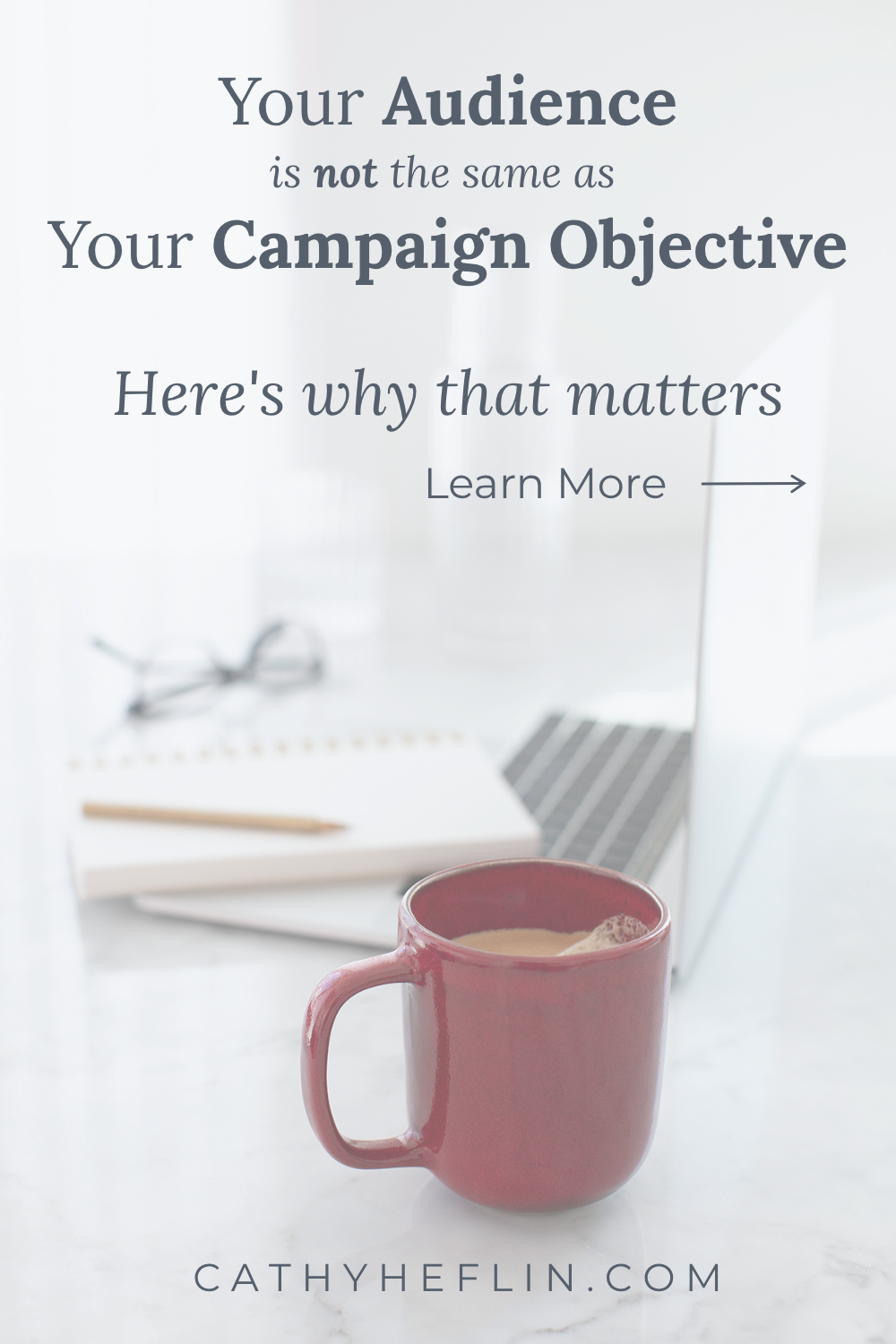
Your campaign objective tells Pinterest what action you want.
Your audience tells Pinterest who you want to reach.
They aren't the same decision.
It's easy to think:
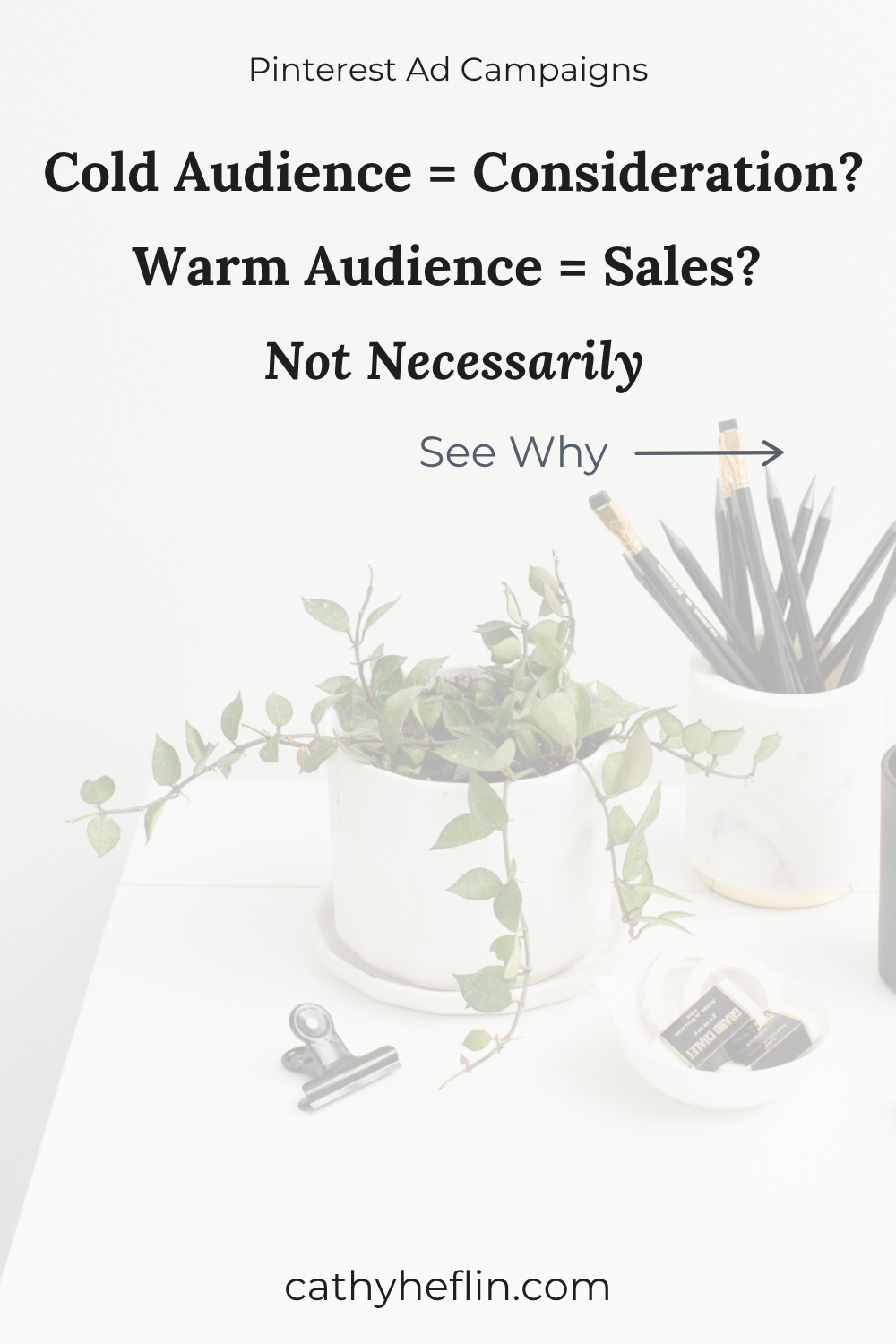
Cold audience = Consideration campaign
Warm audience = Sales campaign
But that's not necessarily how it works. For example:
✔️ You can run a Sales campaign to a cold audience.
✔️ You can run a Consideration campaign to a warm audience.
✔️ You can run a Lead campaign to someone who has never heard of you before.
It all comes back to the next action you want that particular audience to take.
So before choosing your objective, think about who you're talking to.
Cold Audiences
A cold audience includes people who haven't interacted with your business yet.
On Pinterest, you might reach these people through keywords, interests, or Pinterest's automated targeting.
They may be discovering your brand, product, or content for the first time.
Warm Audiences
Warm audiences already have some familiarity with your business.
They may have:
• Visited your website
• Engaged with your Pinterest content
• Viewed particular pages or products
• Interacted with your brand in another trackable way
Depending on what they've done, some warm audiences will have more purchase intent than others.
Someone who read one blog post isn't necessarily at the same point in the buying journey as someone who viewed a product several times or added it to their cart.
That's why I don't recommend choosing your campaign objective based on the label "cold" or "warm" alone.
📌 Save this Image for Later! 📌
Choosing a Pinterest Campaign Objective
When Should You Use a Pinterest Consideration Campaign?
A Consideration campaign can make sense when the next action you want someone to take is to visit, explore, or learn more.
You're not necessarily asking for the sale yet.
For example, you might send someone to:
• A helpful blog post
• A buying guide
• An educational landing page
• A product collection
• A product that requires more education
• Content that introduces them to your business or offer
This can work particularly well for businesses with a longer customer journey.
Think about a higher-priced product. Someone discovering it for the first time may not be ready to purchase after seeing one Pin.
Your first goal might simply be to get that person onto your website so they can learn more.
But Consideration isn't only for cold traffic.
Let's say someone visited your website a few weeks ago but didn't take another action. You could retarget that audience with a Consideration campaign because your goal is to get them to come back.
You're using retargeting, but you're not necessarily asking Pinterest to optimize for a sale. You are asking for those warm audience members to come back to learn more before we optimize for a sale.
That's an important distinction.
When Should You Use a Pinterest Lead Campaign?
A Lead campaign makes sense when the action you really want is something that happens before a purchase.
That might include:
• Joining your email list
• Downloading a free resource
• Registering for a webinar
• Signing up for a free training
• Requesting information
• Booking a consultation
• Starting a trial
This is where it's important to distinguish between wanting traffic to your website and wanting leads.
Let's say you have a free guide on your website.
You could use a Consideration campaign to send traffic to that landing page.
But if your actual goal is for people to complete the signup, a Lead campaign gives Pinterest a different instruction.
You're no longer saying:
Find people who are likely to click.
You're saying:
Find people who are likely to complete my lead action (sign up, book a call, etc.).
Those are not necessarily the same people.
When Should You Use a Pinterest Sales Campaign?
A Sales campaign makes sense when your goal is a purchase-related action. This could include actions such as Add to Cart or Checkout.
And this is where another common misconception comes up:
Sales campaigns aren't only for retargeting.
You can absolutely use a Sales campaign to reach cold audiences.
For some businesses, going directly from discovery to product makes sense.
For example, an e-commerce brand with a relatively straightforward product, a strong product page, good conversion data (from their Tag), and enough budget may be able to successfully prospect a cold audience with a Sales campaign.
For another business, that approach might be too aggressive.
A higher-priced product, unfamiliar product, complicated service, or offer with a longer decision cycle may require more education before someone is ready to buy.
That's why the answer to "Should I run a Sales campaign?" isn't simply yes or no.
You have to look at the entire customer journey.
Do You Need a Full Pinterest Ads Funnel?
Not necessarily.
A Pinterest advertising funnel doesn't have to include every campaign objective.
Your funnel should match the way people actually buy from your business.
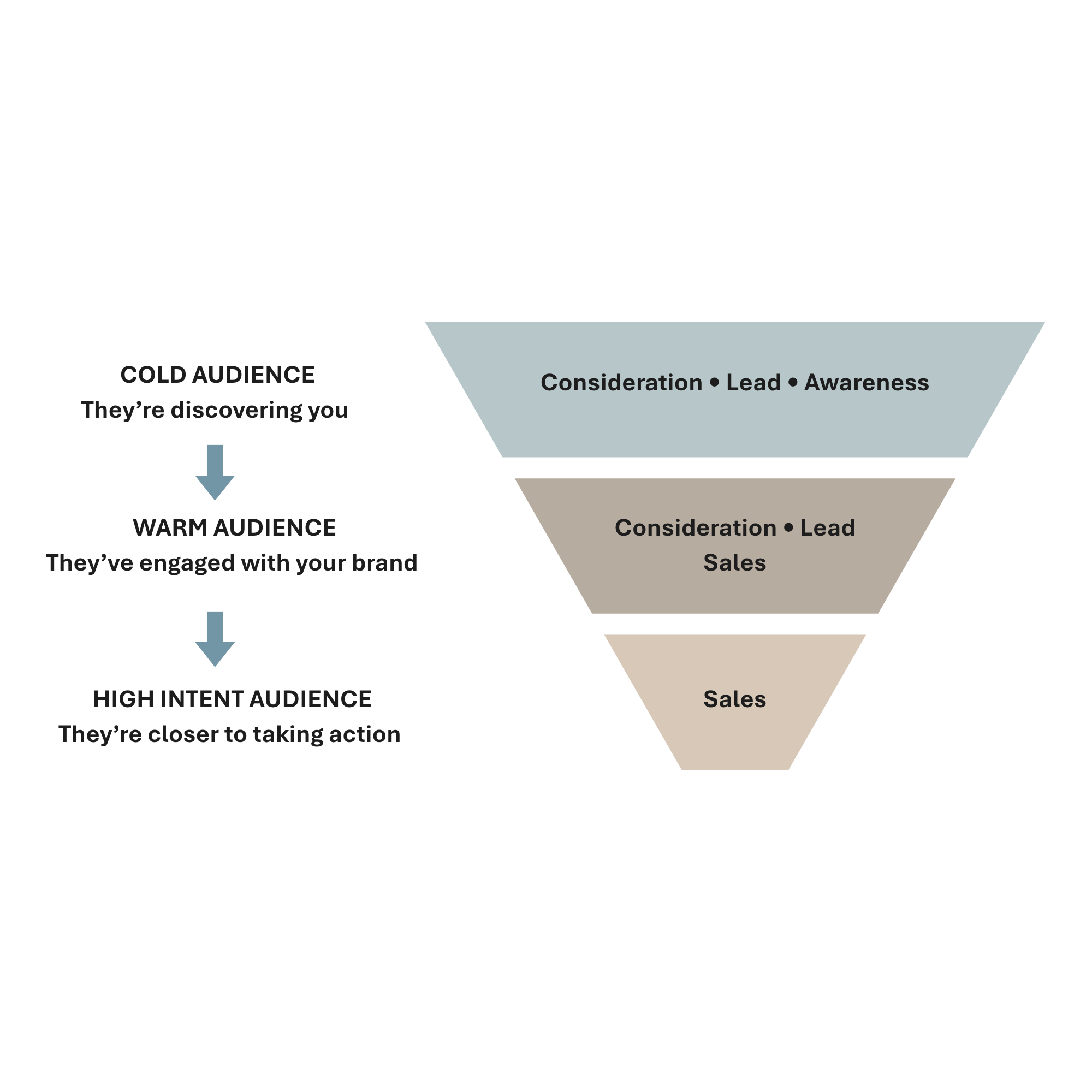
👉 For a relatively straightforward e-commerce product, your funnel might be simple:
Cold Audience → Sales Campaign → Product
👉 For a product that requires more education, it might look more like:
Cold Audience → Consideration Campaign → Educational Content
↓
Warm Audience → Sales Campaign → Product
👉 And for a course, service, or business with a longer sales cycle, you might use:
Cold Audience → Consideration Campaign → Helpful Content
↓
Warm Audience → Lead Campaign → Free Resource
↓
Higher-Intent Audience → Sales Campaign → Paid Offer
None of these is automatically better than the others. The goal isn't to build the most complicated Pinterest ad funnel possible. The goal is to create the right next step for the person seeing your ad.
What About Retargeting?
Retargeting can happen at different points in your Pinterest ad funnel.
And it doesn't always have to mean asking for the sale.
You could retarget:
👉 Blog visitors → with another helpful piece of content
👉 Website visitors → with a lead-generating offer
👉 Product viewers → with the product they explored
👉 Higher-intent visitors → with a Sales campaign
This is why I like to think about retargeting as an audience strategy, not a campaign objective.
The question isn't simply, "Should I retarget this person?"
It's: What should I ask this person to do next?
Once you know that, you can choose the campaign objective that supports that action.
4 Questions to Ask Before Choosing Your Pinterest Ad Campaign
Before you choose your campaign objective or start building your next Pinterest ad campaign, ask yourself these four questions:
1. Who am I talking to?
Is this a cold audience, warm audience, or someone showing higher intent?
2. What do they already know about my business?
Are they discovering you for the first time, or have they already visited your website or interacted with your content?
3. What do I want them to do next?
Visit? Learn? Sign up? Come back? Add to cart? Purchase?
4. Which Pinterest campaign objective is designed to optimize for that action?
That's where I would start.
Not with the campaign type you heard someone else say is "best."
Not with the objective Pinterest happens to recommend during setup.
And not by assuming every cold audience needs traffic first or every warm audience should immediately be asked to buy.
Start with your customer and the action that makes sense for them next.
Then build the campaign around that.
Your Pinterest Ad Strategy Should Match Your Customer Journey
There isn't one Pinterest ad campaign or funnel that's right for every business.
A successful strategy might use Consideration, Leads, Sales, or a combination of all three.
What matters is that your business goal, audience, campaign objective, landing page, and ad creative are all working together.
When those pieces make sense together, you're not simply running Pinterest ads.
You're building a strategy that moves the right people toward the next step in your business.
Need help with your Pinterest ads?
If you're ready to advertise on Pinterest but aren't sure which strategy makes sense for your business, I offer full-service Pinterest Ads Management. I'll develop your campaign strategy, set up and manage your ads, and continually optimize based on performance. Learn more about Pinterest Ads Management.